Hello everyone,
Benni here. Today I want to give you a tour of my live drum setup, how it progressed over the years and how we use our backing track system to get all the keyboard parts and effect sounds on stage.
This post might be more interesting for the musicians among you - especially drummers - but it might also be a good read for everyone who is interested in how we try to achieve the best possible live sound on stage with the least amount of gear and the shortest possible setup time. And if you are a touring musician, you know that this combination is almost impossible to achieve, haha.
But let’s start with the drum kits first and how (and why) they evolved over the years.
Sonor Ascent period
The drum kit I used in the “Once and for All” video is one I played for a long time. It’s a Sonor Ascent kit with two 20” bass drums, 10x8” and 12x9” toms, a 16x16” floor tom and a 14x5.5” snare.
The cymbals were Paiste Alphas: 16”, 17” and 18” Rock crashes, 10” and 12” Rock splashes, a 20” Metal Ride, a 16” China and two pairs of 14” Rock hi-hats. The bass drum pedals were two Speed Cobras back then and the hardware was mostly from Gibraltar.
Sonor Ascent Kit at the ‘Once and for All’ video shooting
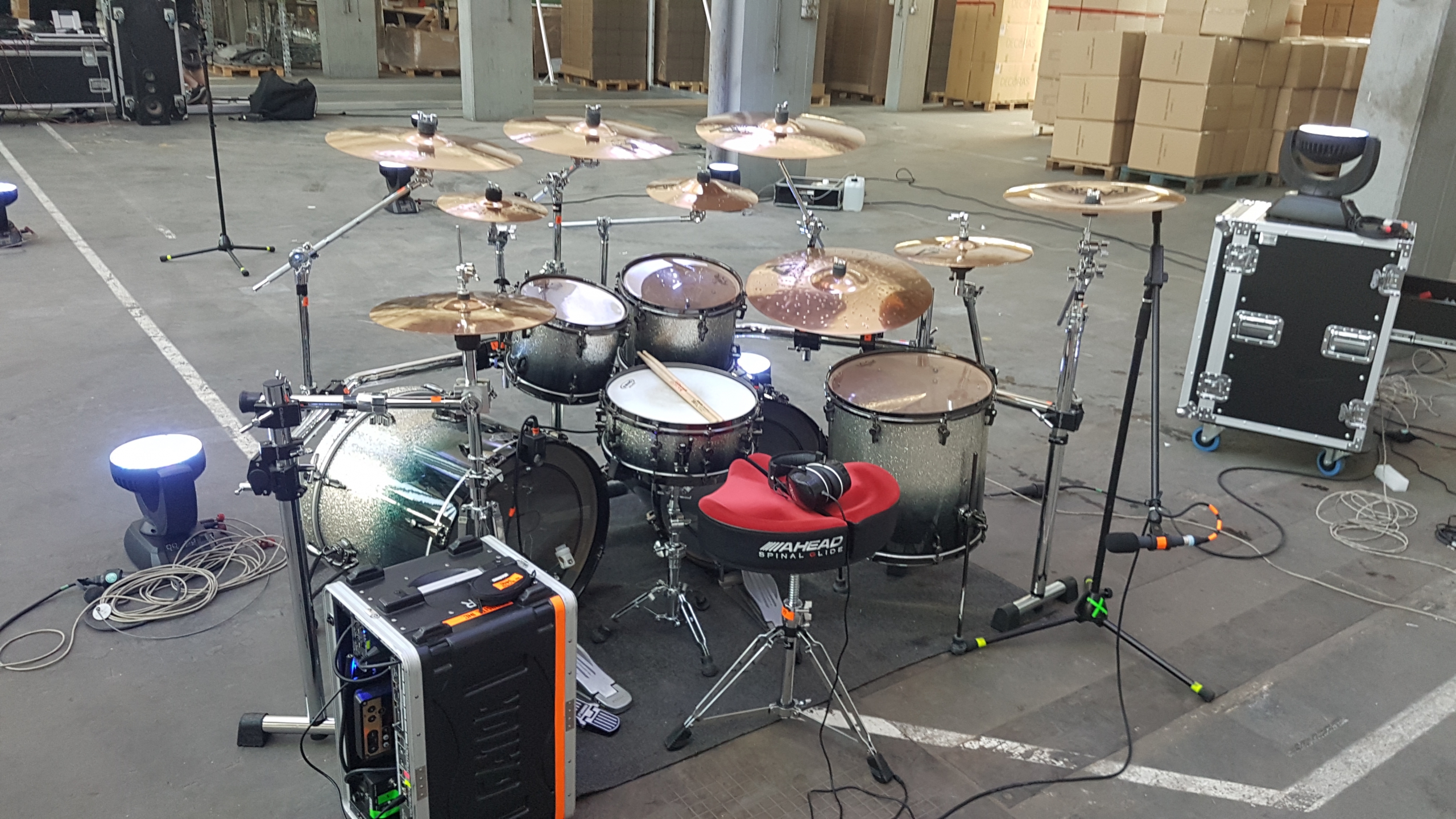
Sonor Ascent Kit at the ‘Once and for All’ video shooting
The pros of this setup were:
- Two bass drums simply look way more metal than one
- Symmetrical setup
- Two pedals feel more natural than a double pedal
The cons were:
- Two bass drums won’t fit easily into the band van
- Takes a lot of space on stage
- Time consuming to set up correctly
- Not black and doesn’t always match the stage color scheme
2 x 20x8" toy bass drum period
Since it often wasn’t possible to bring my own drum set to gigs due to limited space in the band van, I came up with a workaround.
I ordered two custom-built 20x8” bass drums which only take the space of one regular 20x16” bass drum. This allowed me to use shared backline drum kits while adding my own bass drums and keeping a consistent triggering setup.ure.
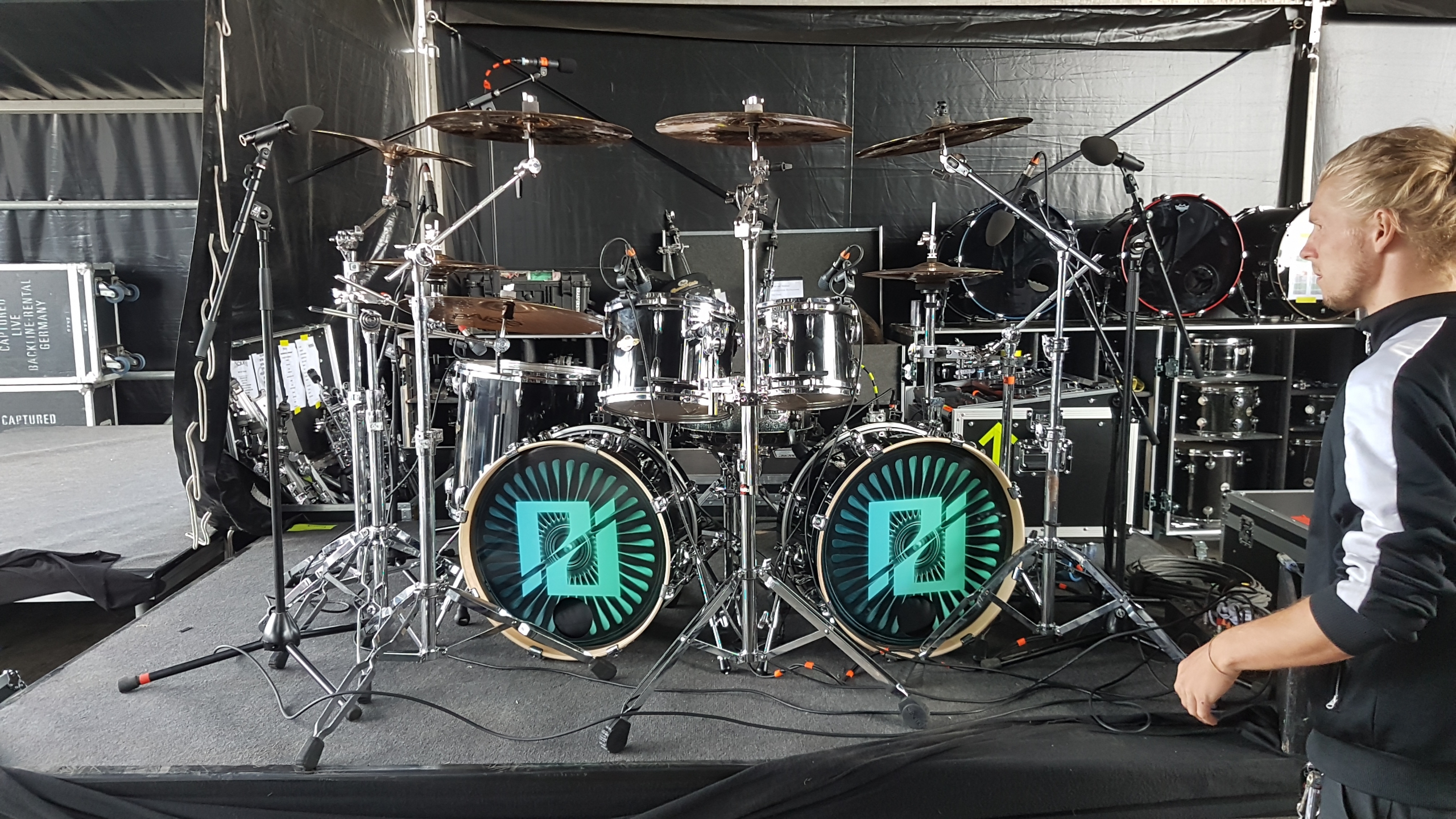
2 x 20×8″ Summer Breeze 2018 Seutp (Dead and Alive Release show)
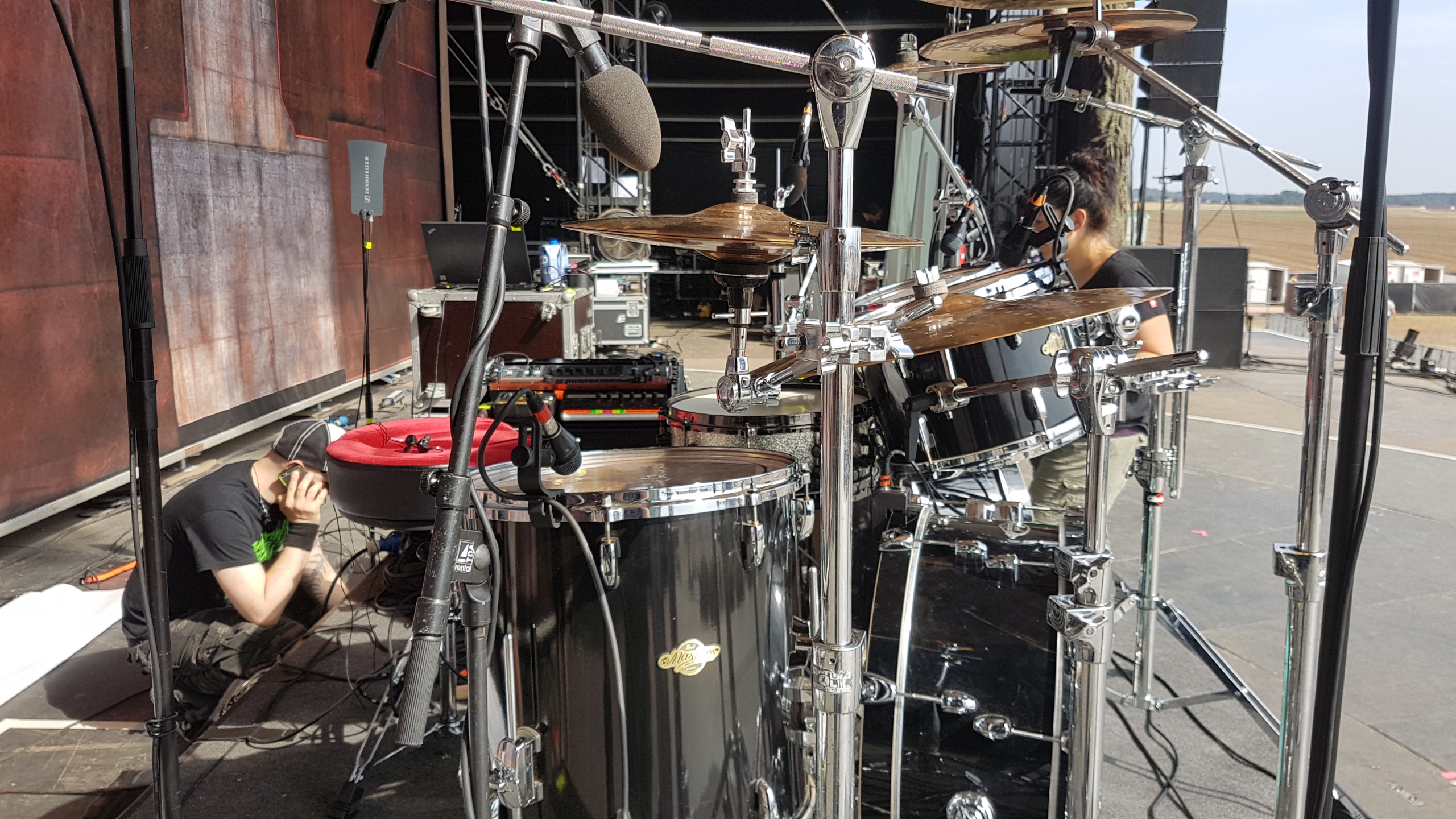
2 x 20×8″ Summer Breeze 2018 Seutp (Dead and Alive Release show)
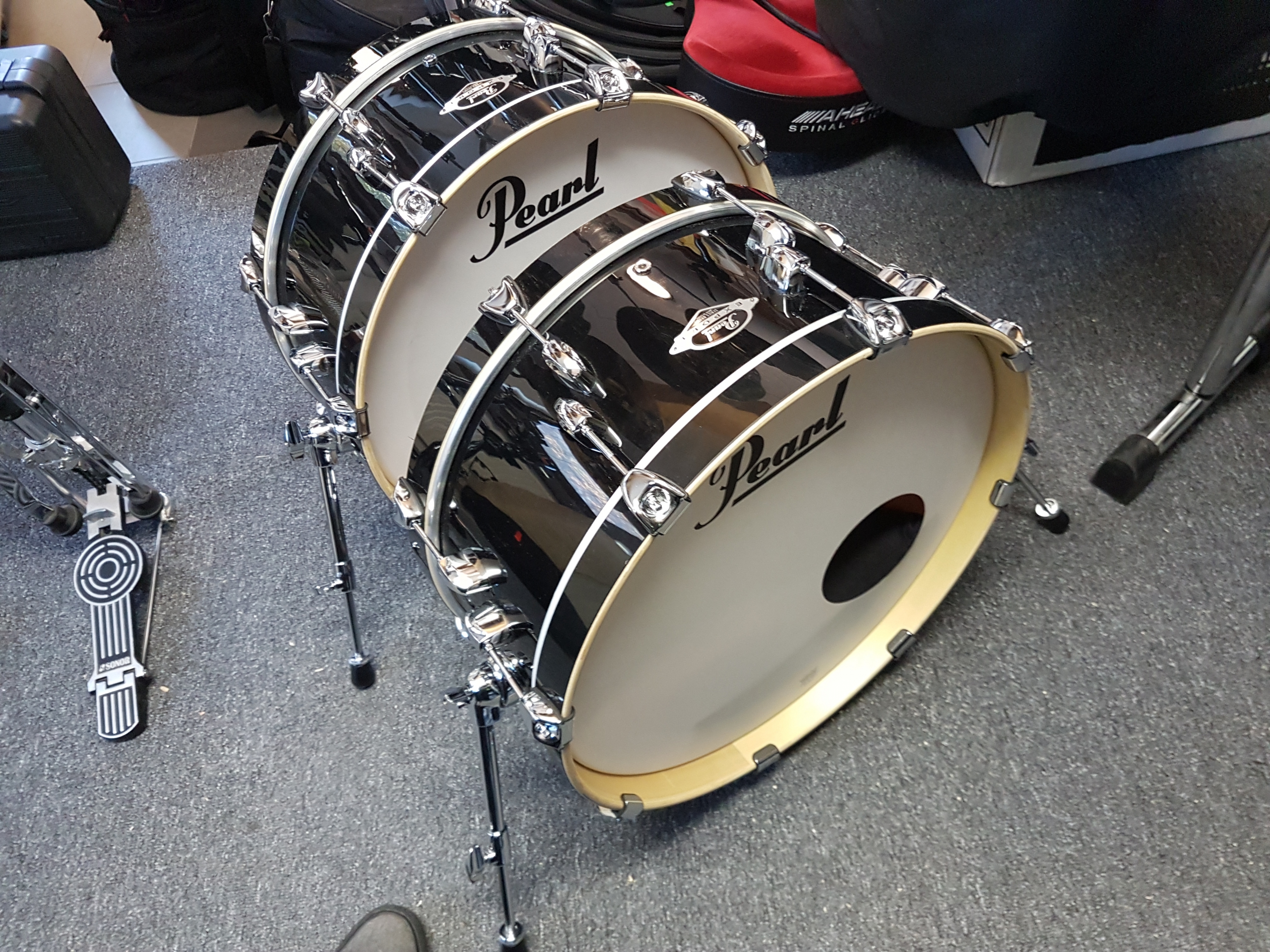
2 x 20×8″ Custom Build bass drums
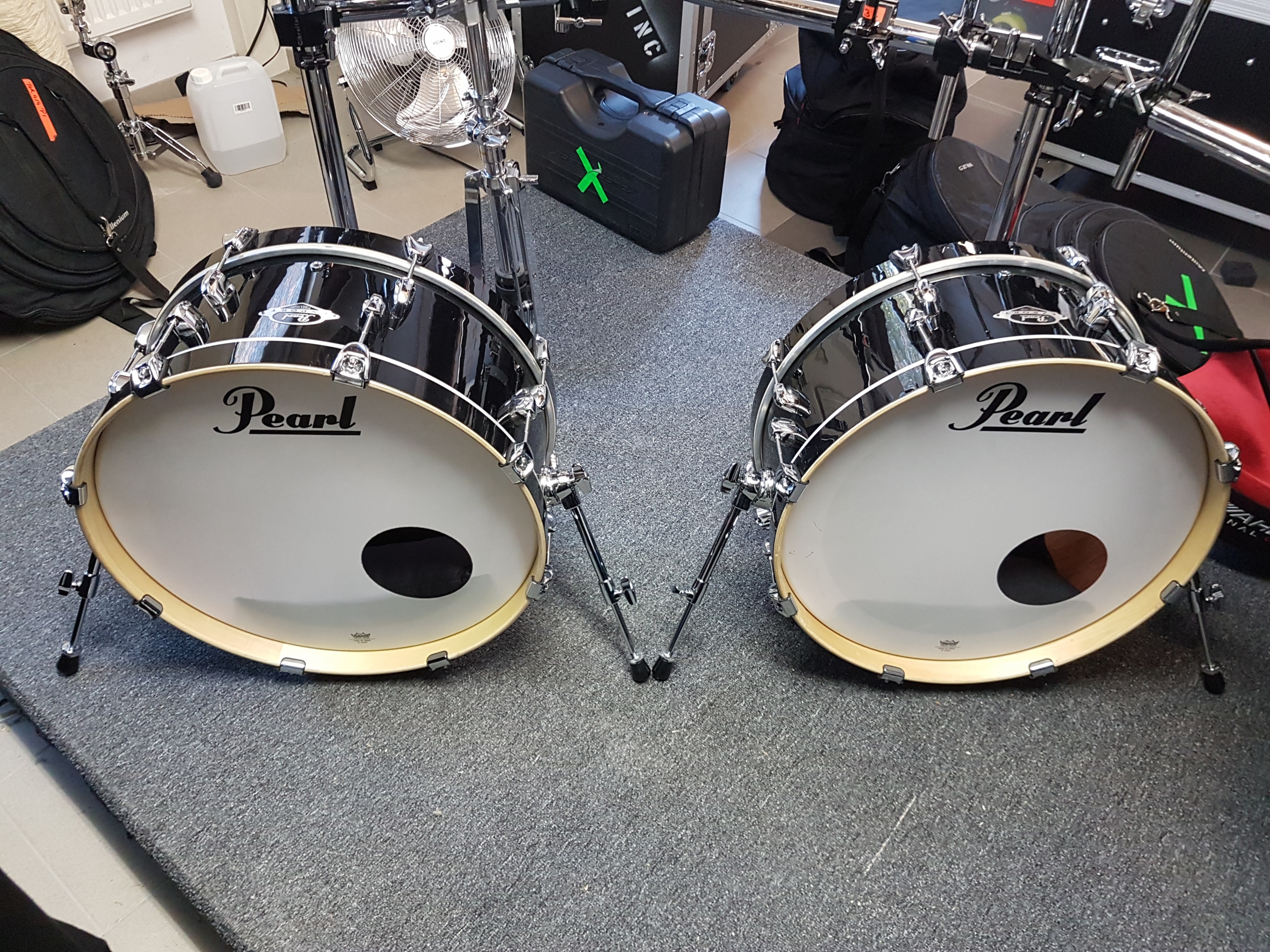
2 x 20×8″ Custom Build bass drums
The pros of this setup were:
- Still two bass drums but easy to transport
- Consistent and symmetrical setup regardless of backline
The cons were:
- They look like toy drums and need explanation every gig
- Backline kits sometimes sounded inconsistent
Evolution of the current setup
Over time we changed our live setup significantly. Instead of relying on FOH monitor mixes and wedges, we switched early to in-ear monitoring, especially because we wanted to use backing tracks for keyboards and sound effects. A major issue was inconsistent drum monitoring from FOH. The solution was bringing our own fully mic’d drum kit to every show, ensuring consistent monitoring and FOH sound. The downside again was space, so I worked on minimizing the setup size while keeping symmetry and fast setup times. 

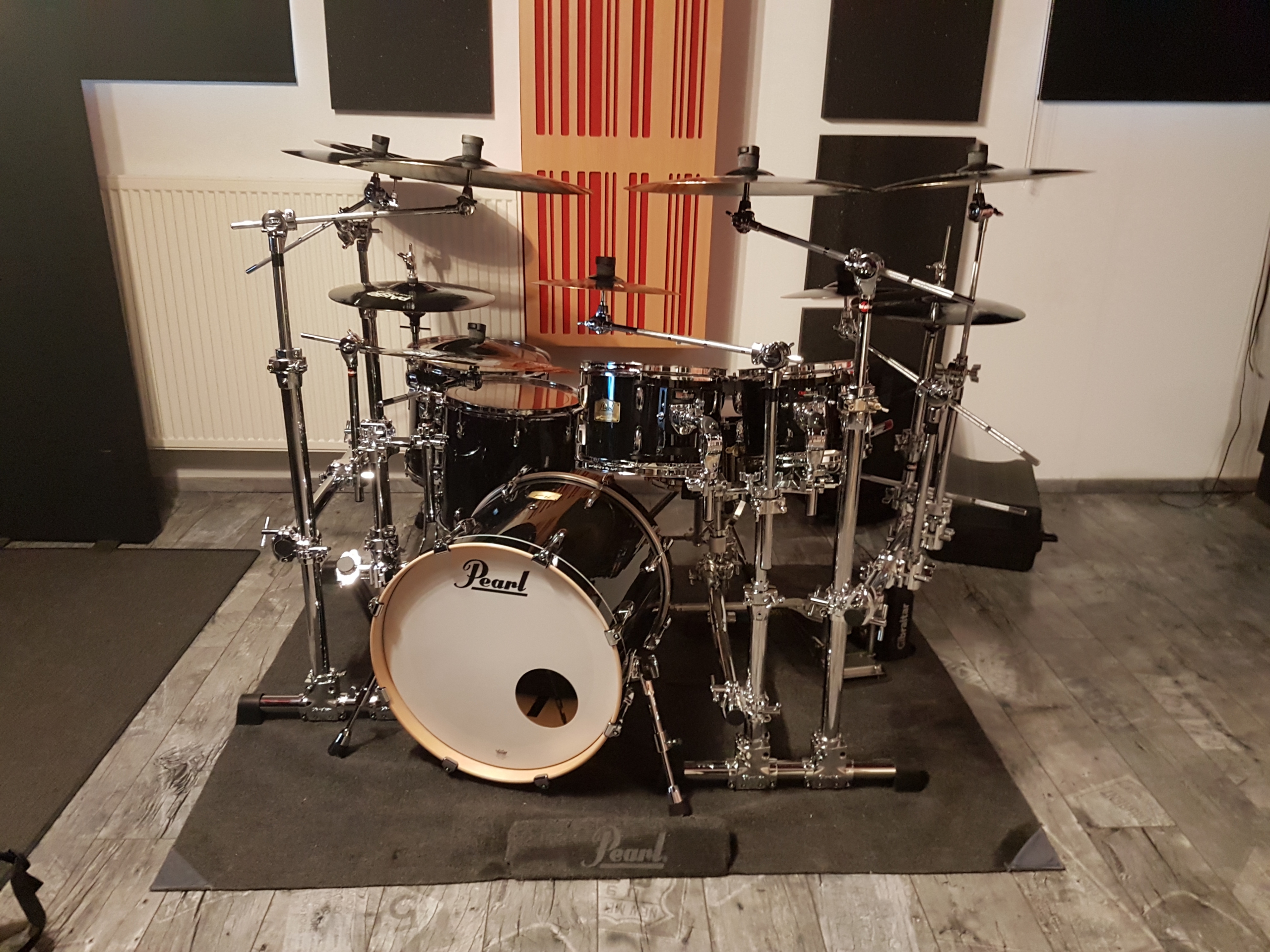
One bass drum, asymmetrical setup
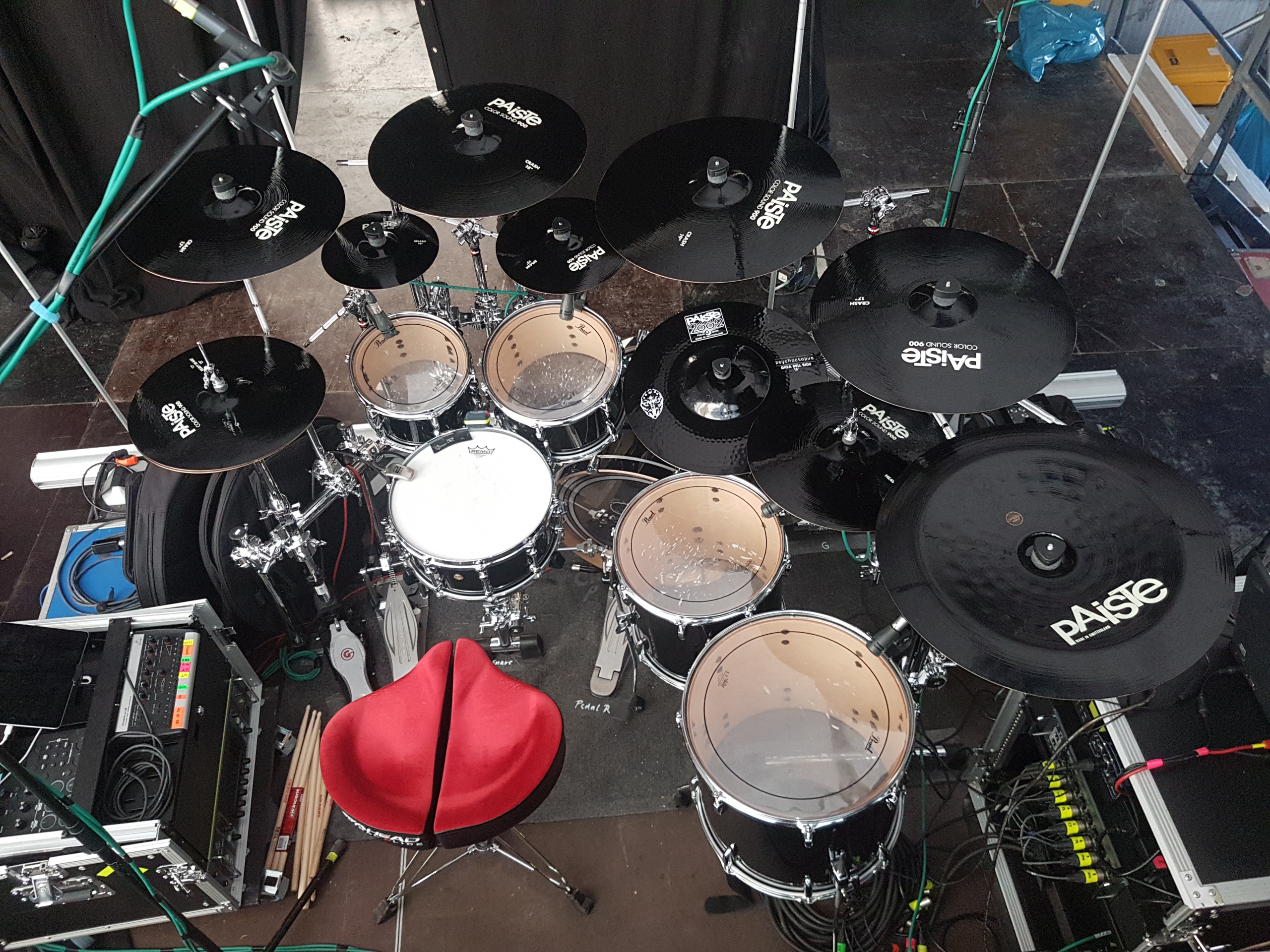
One bass drum, asymmetrical setup
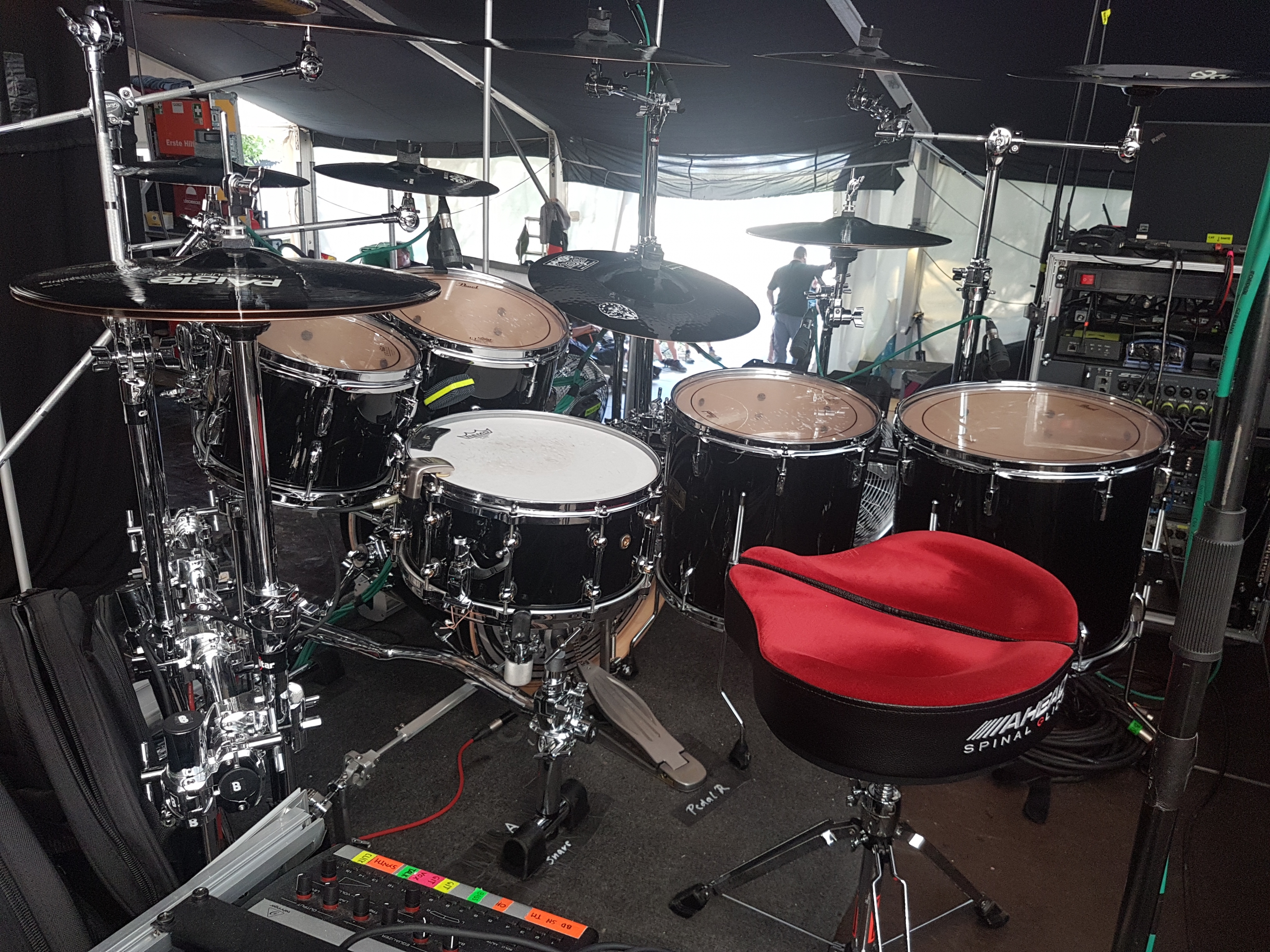
One bass drum, asymmetrical setup
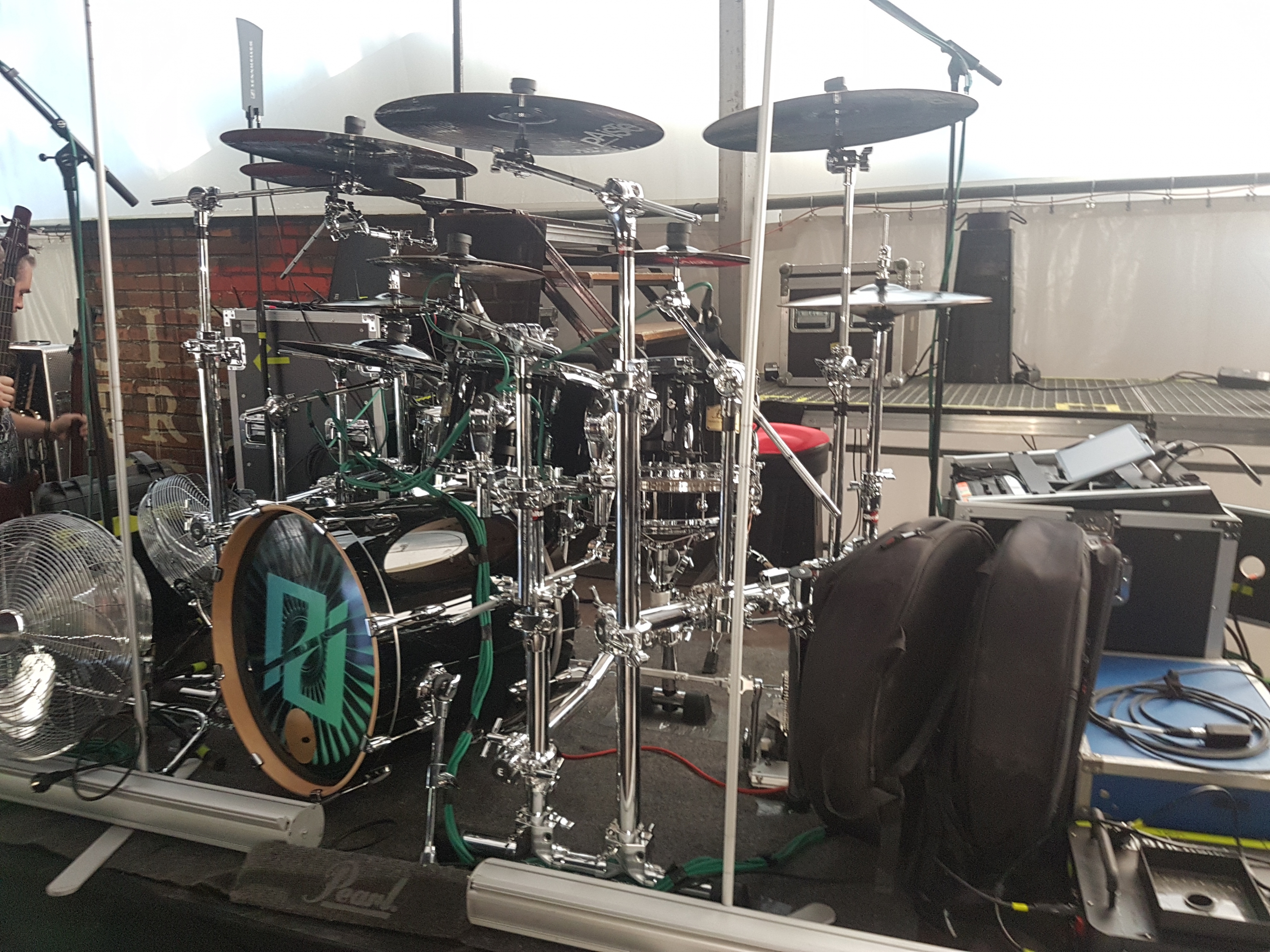
One bass drum, but asymmetrical setup
This is where ACD Unlimited came in. Their middle pedal allows a completely symmetrical setup using only one bass drum. Additionally, I split the rack into two symmetrical parts that can be carried on stage fully assembled with hardware, cymbals and microphones already mounted.
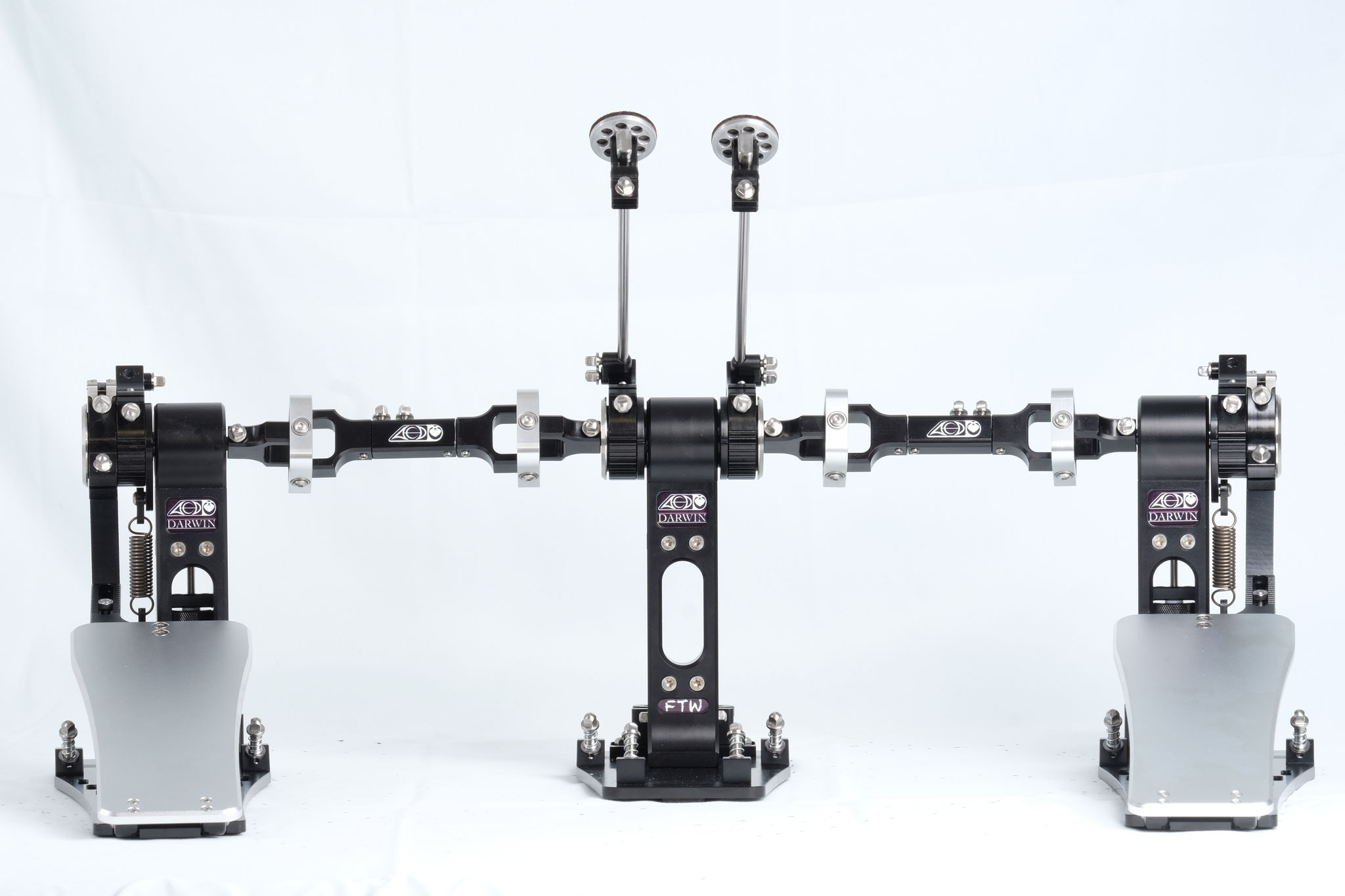
ACD Unlimited Darwin Middle Pedal 1/4
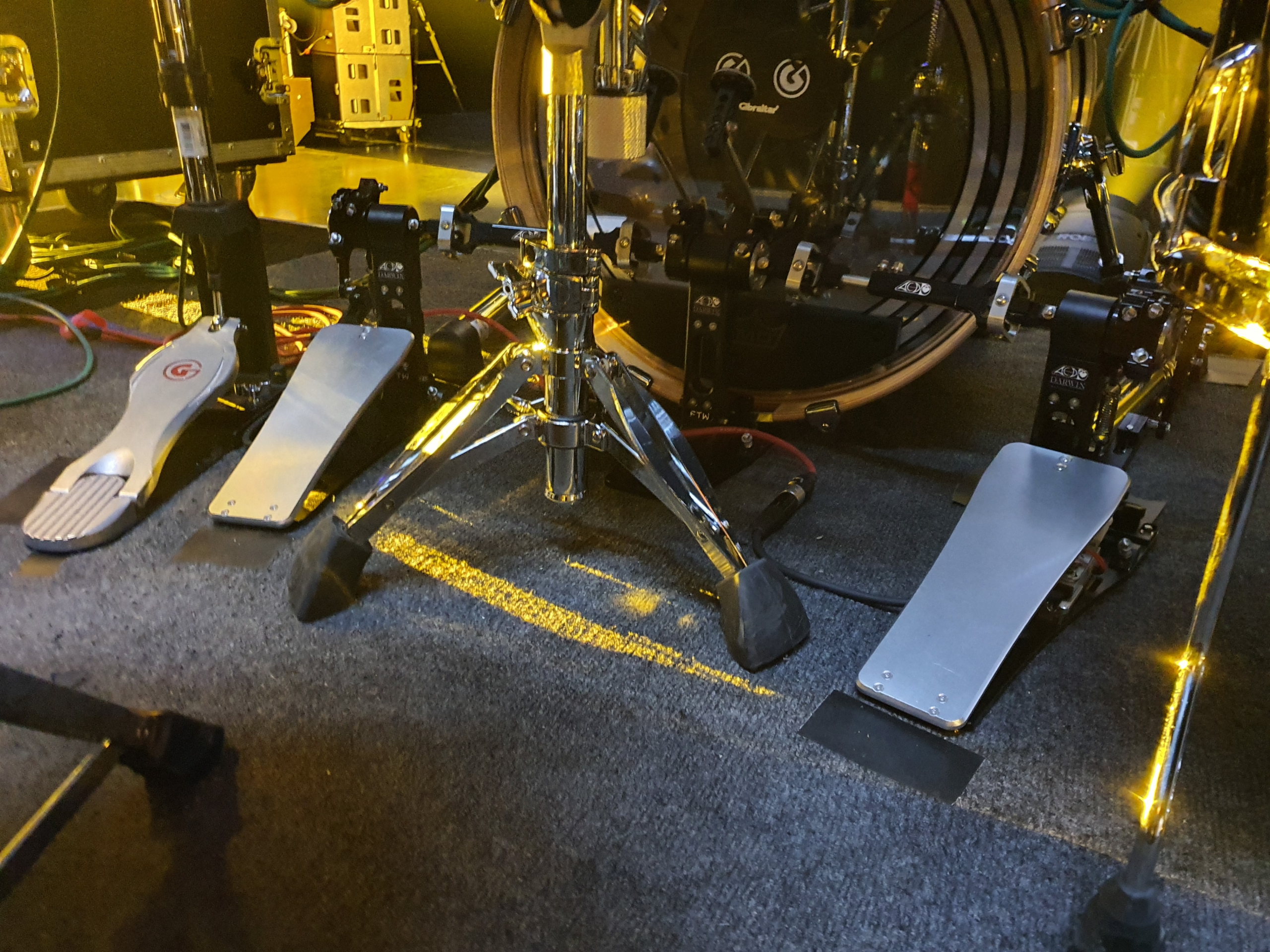
ACD Unlimited Darwin Middle Pedal 2/4
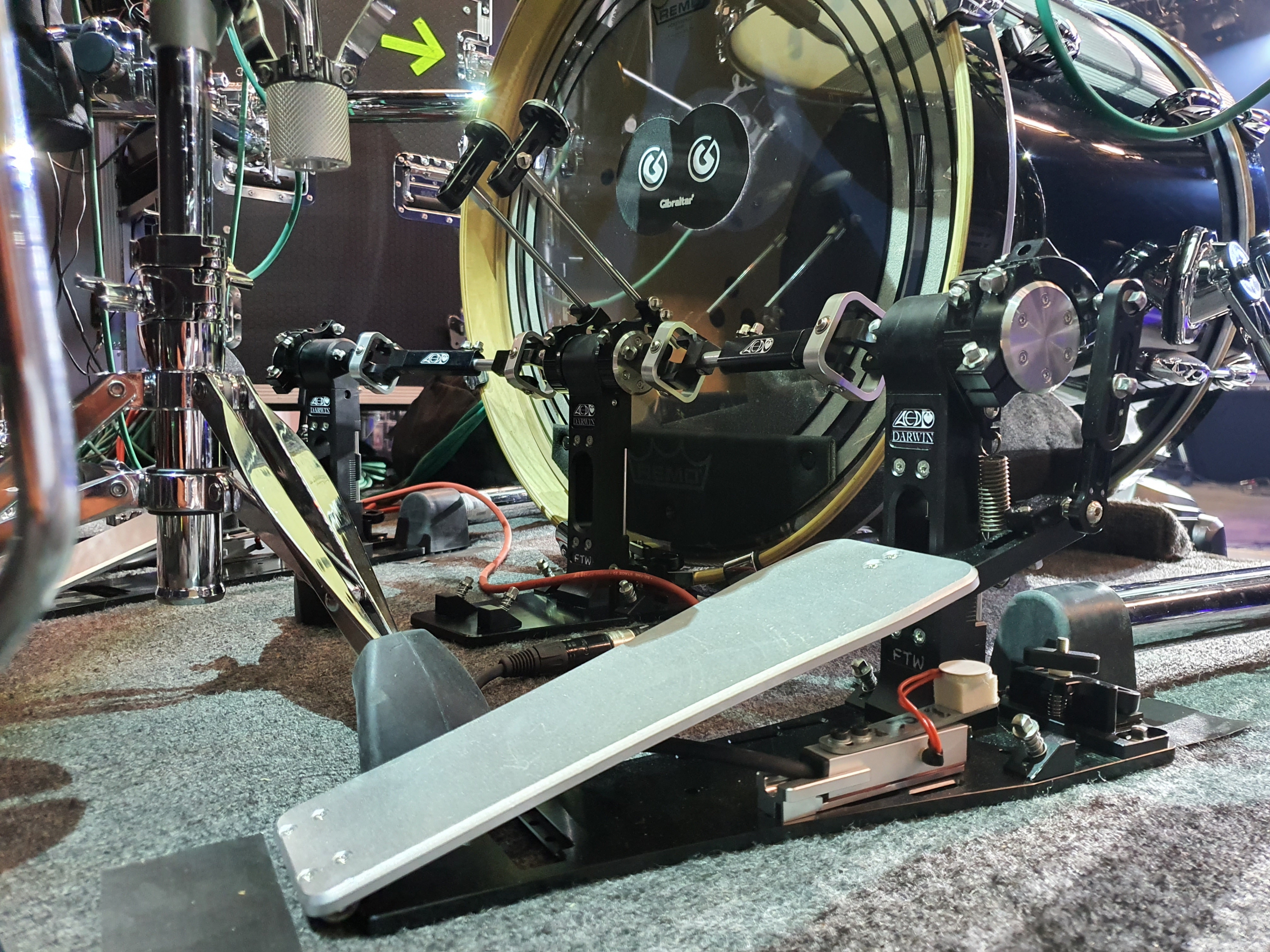
ACD Unlimited Darwin Middle Pedal 3/4
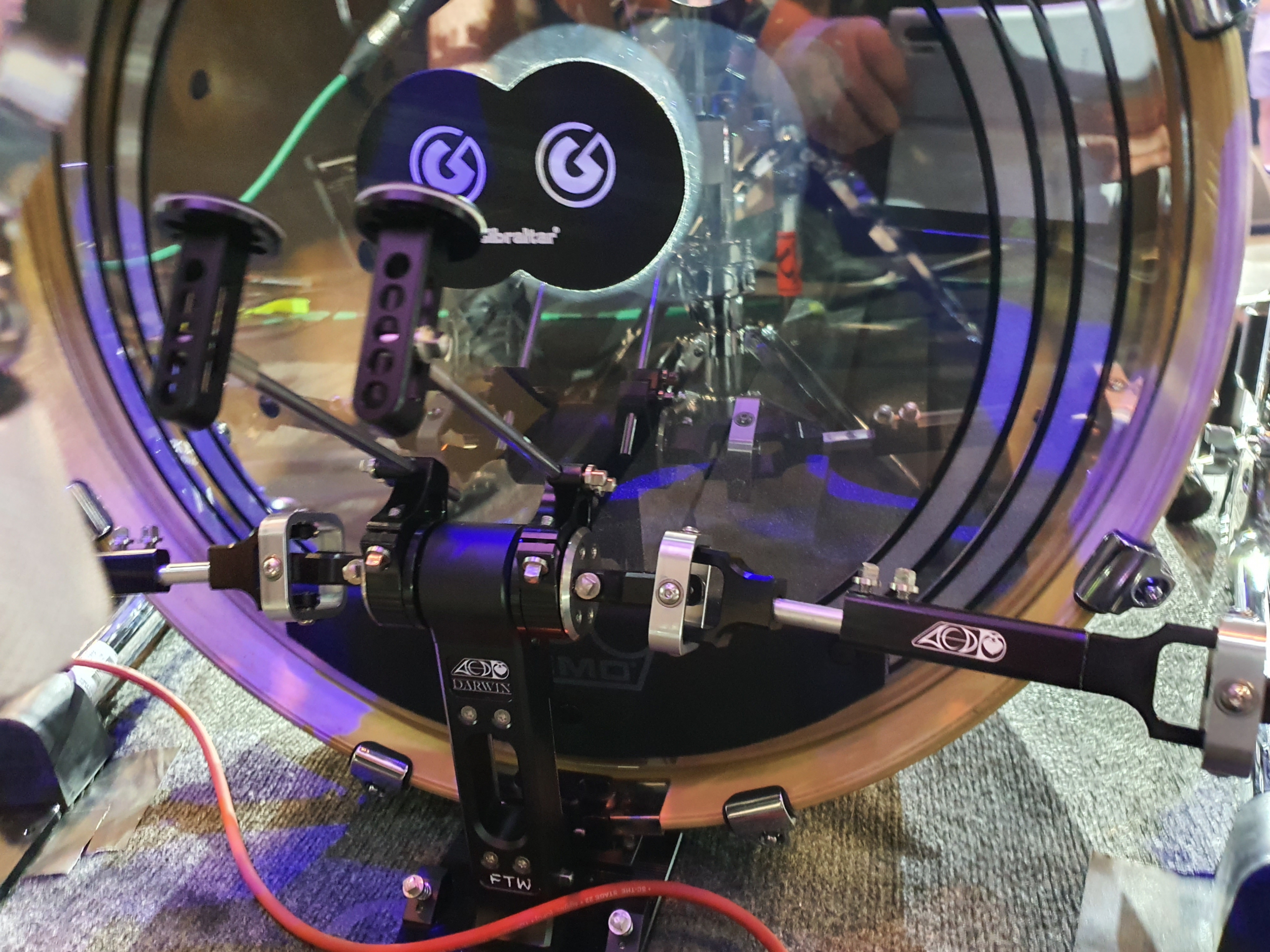
ACD Unlimited Darwin Middle Pedal 4/4
Current setup
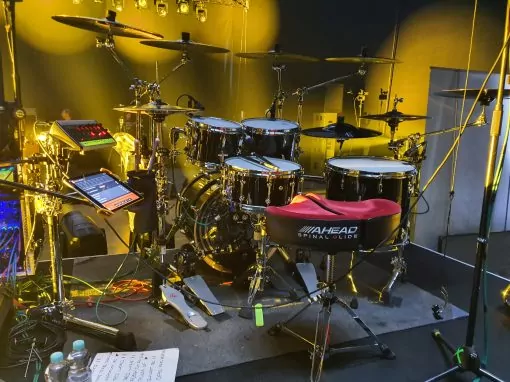
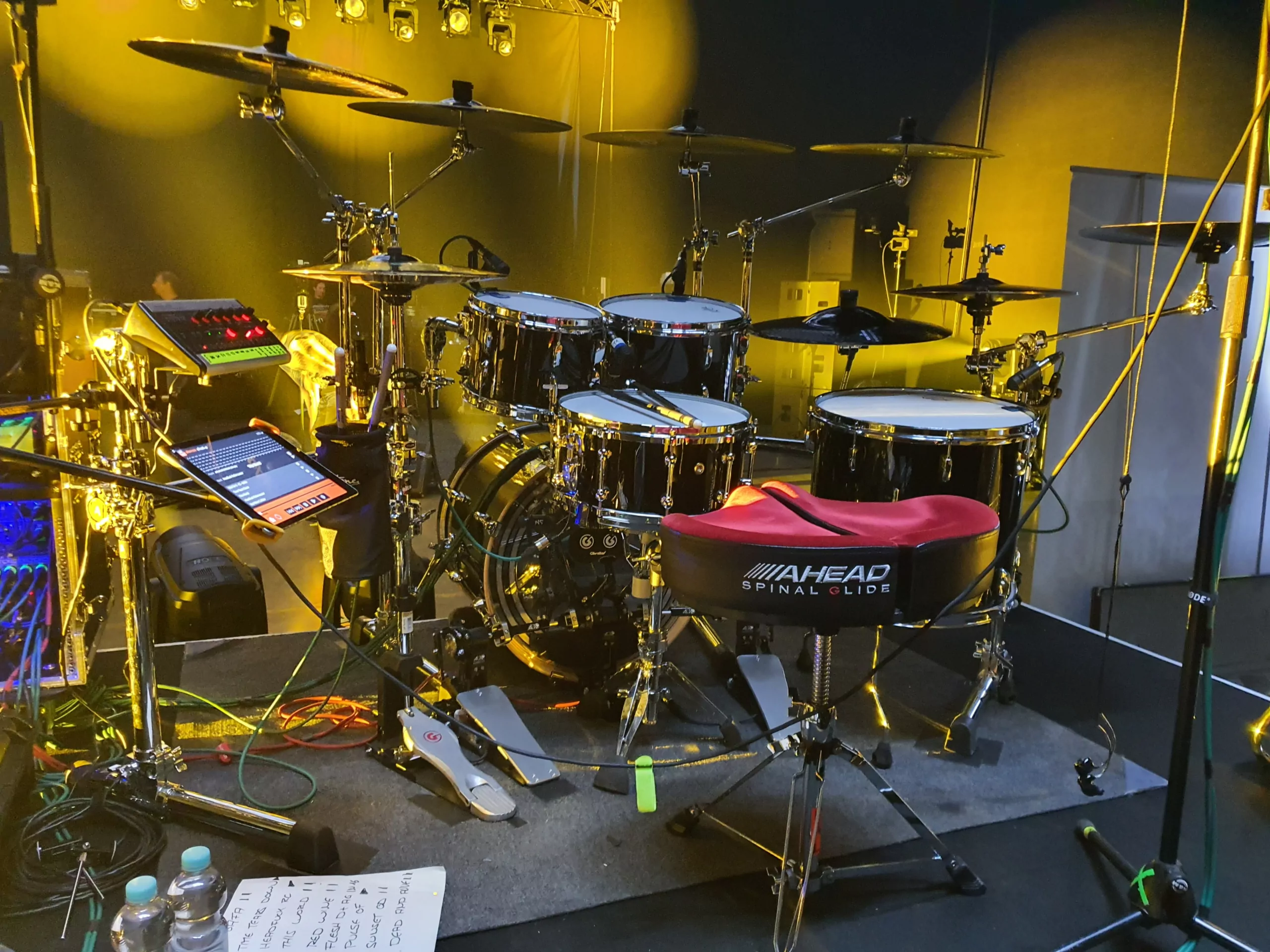
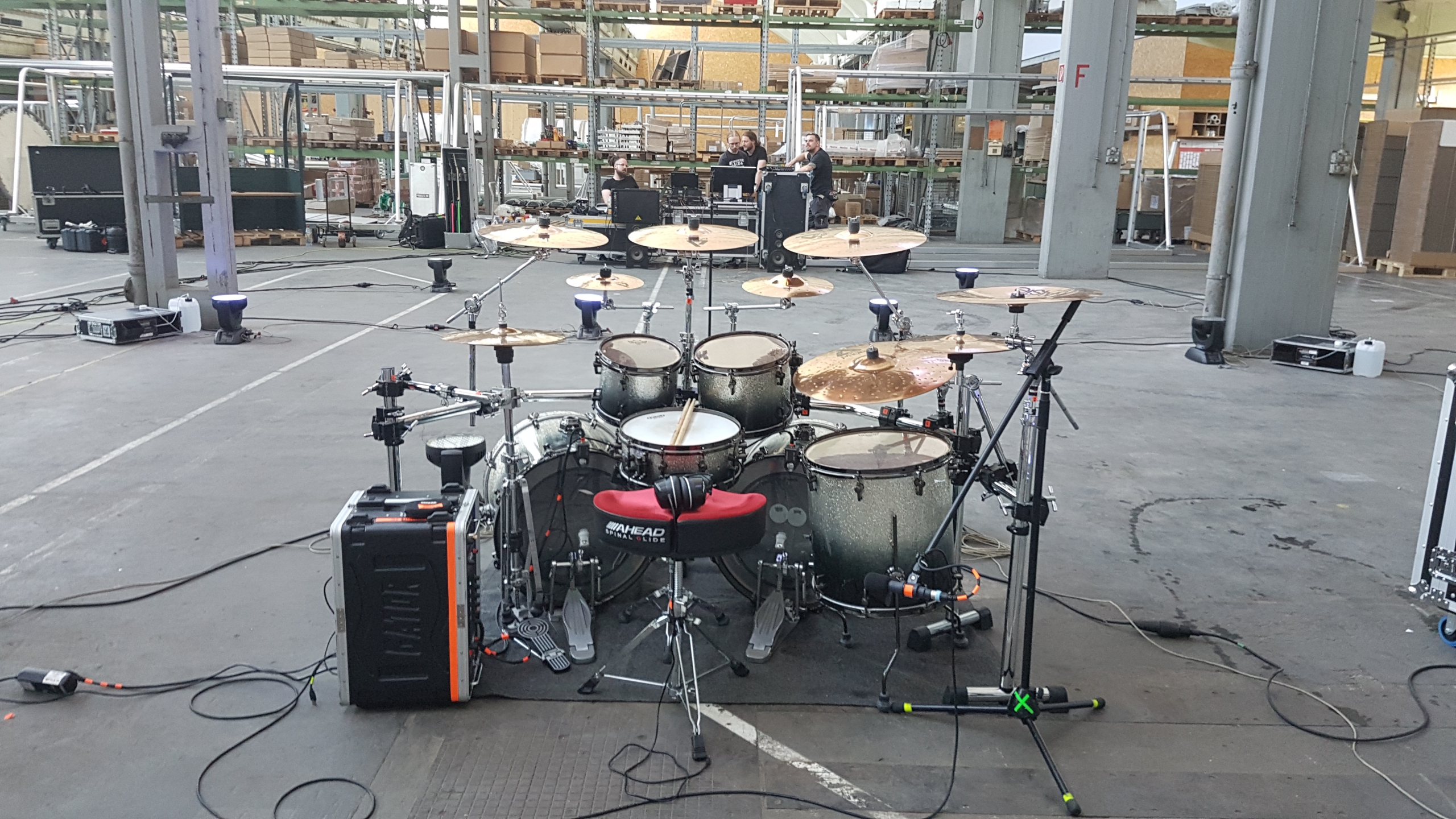
My current setup is a Pearl Session Classic kit with a 20x16” bass drum, 10x7” and 12x8” toms and a 16x14” floor tom. The snare is a Pearl Maple Premium 14x6.5”. Cymbals are Paiste 900 Blacks: 17”, 18” and 19” crashes, two 15” hi-hats, an 18” China and an 18” Paiste 2002 Giga Bell Ride. The hardware is now completely Gibraltar except for the bass drum pedal. Triggers are One-Trigger V3 mounted directly to the pedal with a Roland RT30K backup trigger. The module is a Roland TM6.
Heads:
- Remo Ambassador X Coated tom heads
- Remo Powersonic Clear bass drum head
- Powerstroke 4 Coated snare head
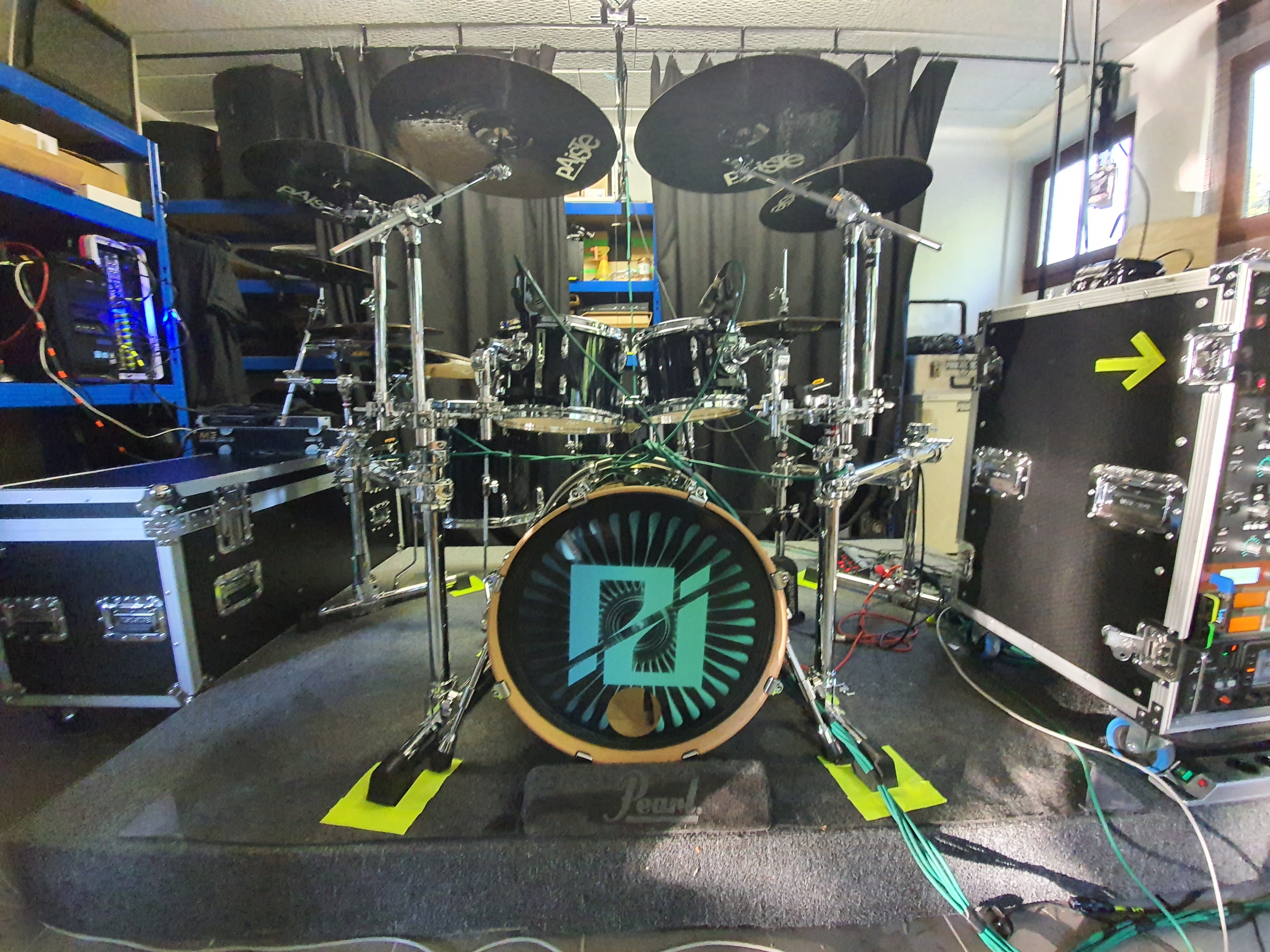
Current setup in our rehearsal room, fisheye view
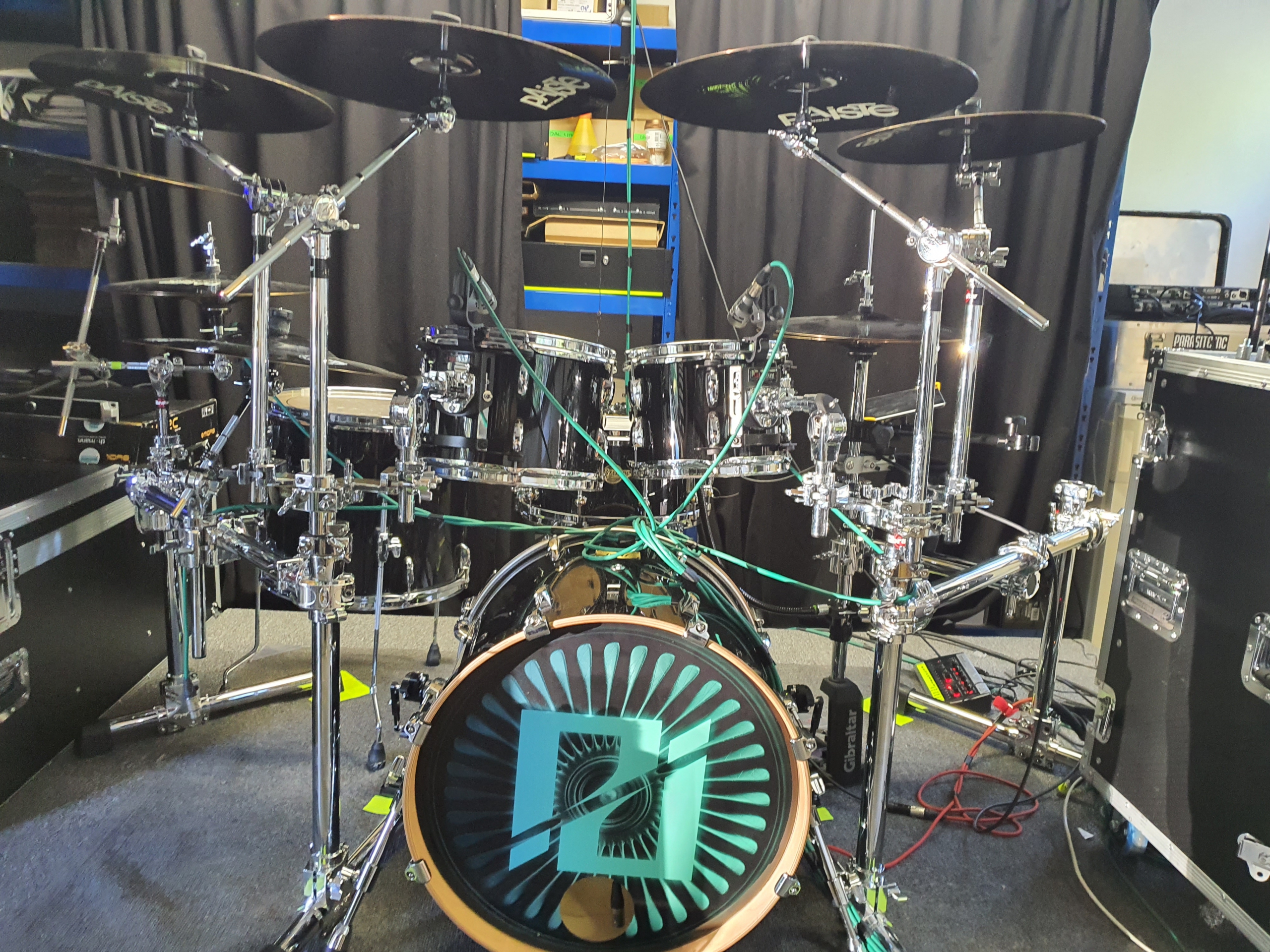
Current setup in our rehearsal room
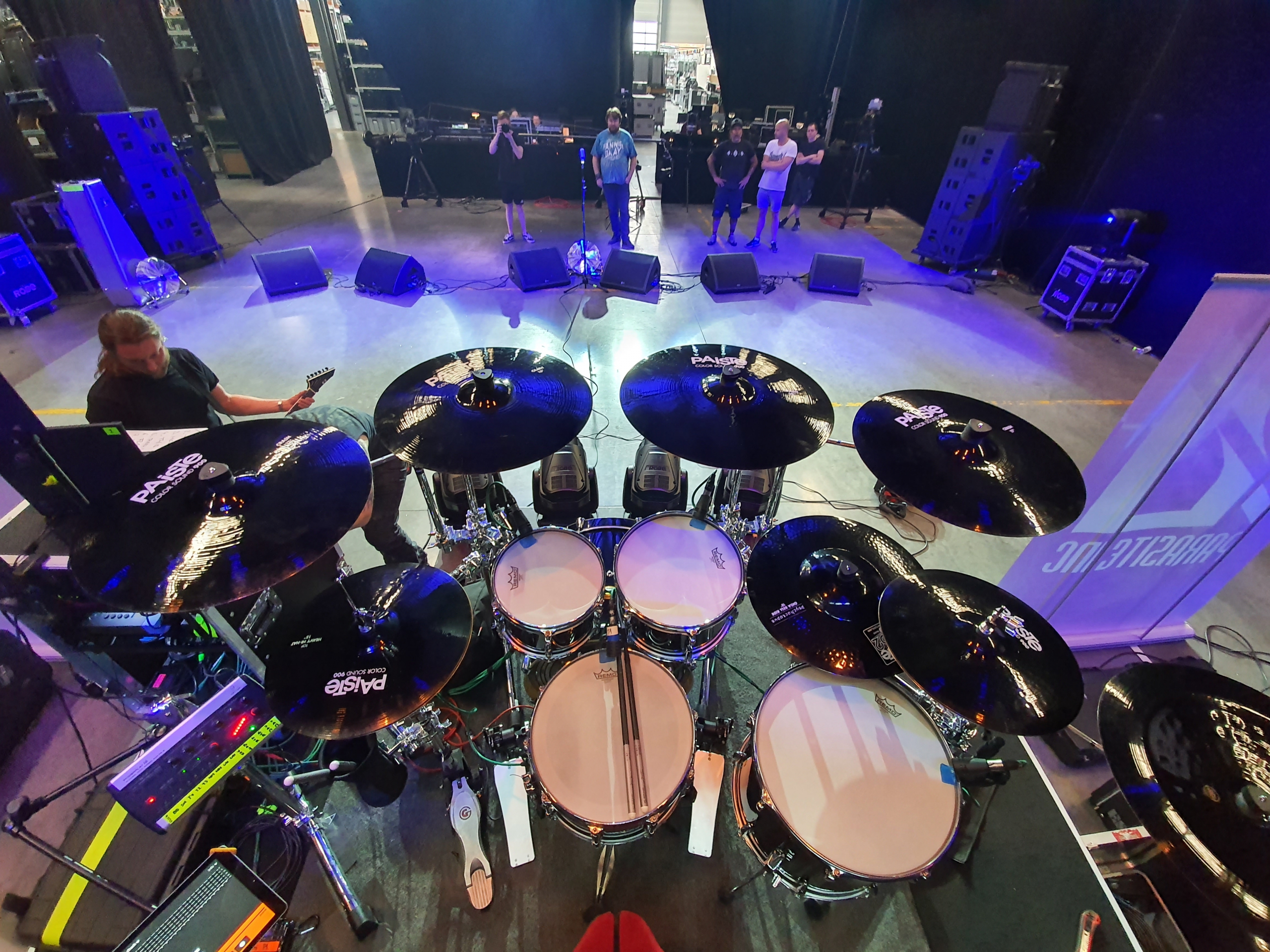
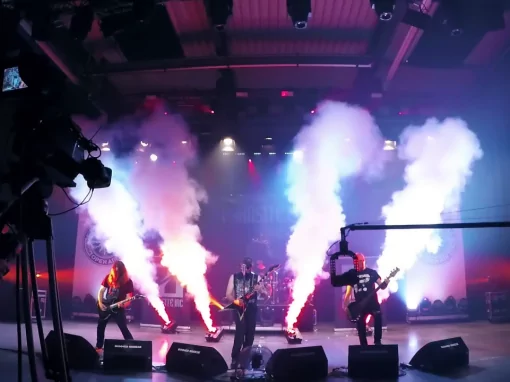
Current setup at the EMFA 2020 streaming show
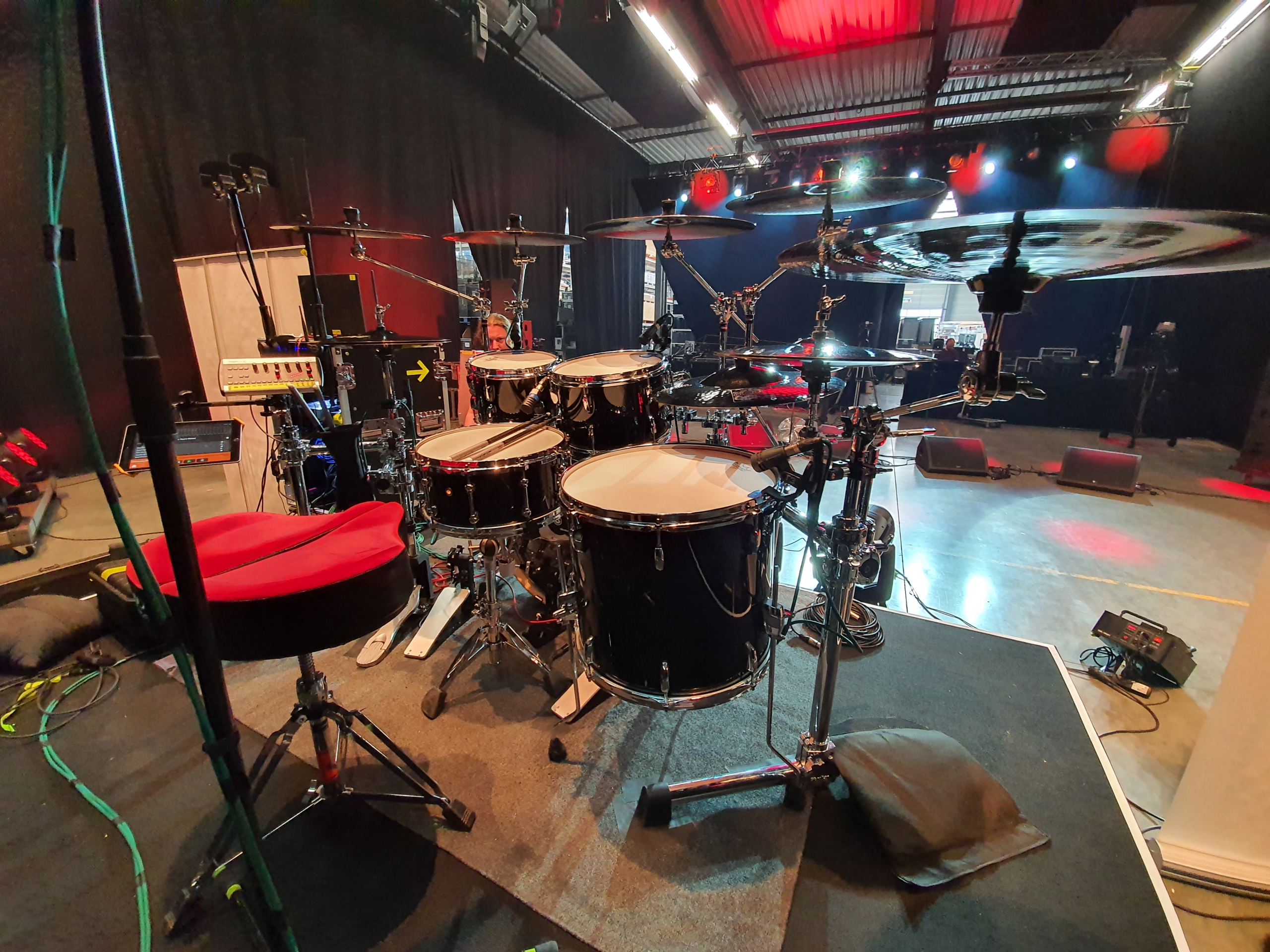
Current setup at the EMFA 2020 streaming show
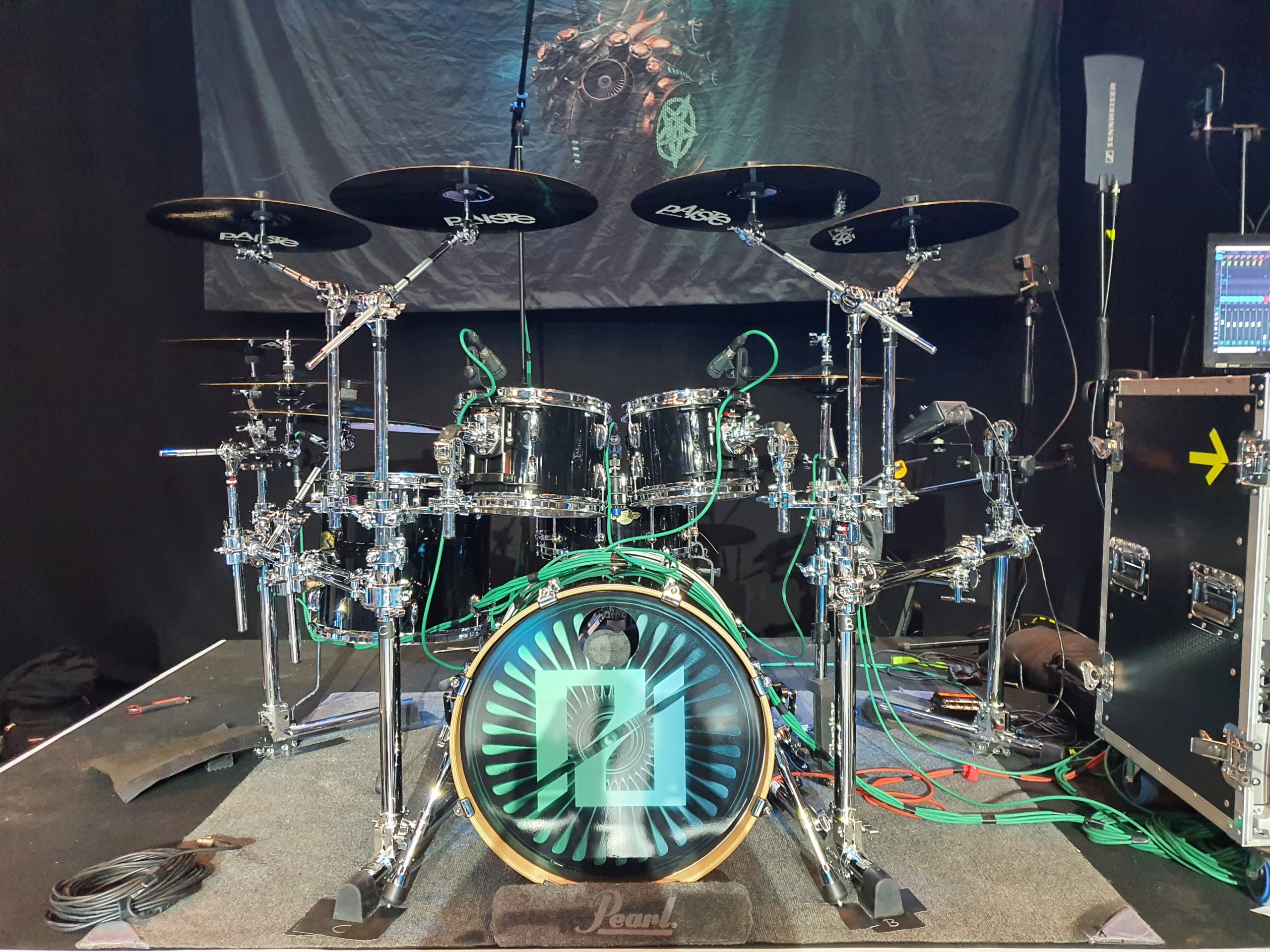
Current setup at the EMFA 2020 streaming show
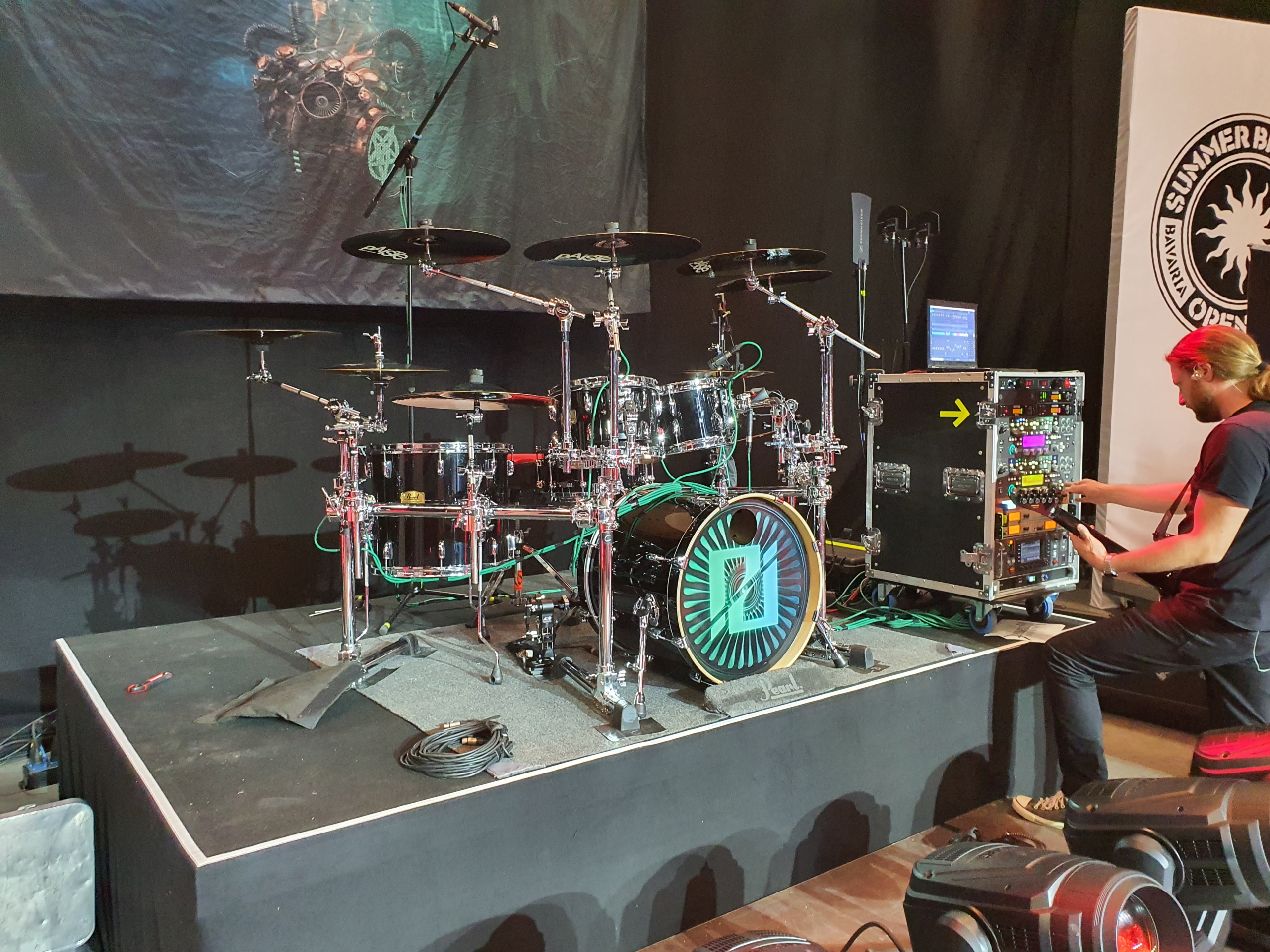
Current setup at the EMFA 2020 streaming show
The pros of this setup are:
- Extremely compact
- Almost completely symmetrical
- Very fast setup
- All black appearance
The cons are:
- Doesn’t look as impressive as a double bass setup
Backing tracks & In-Ear
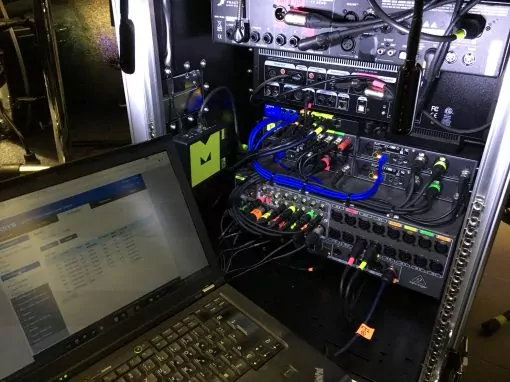
We use a Cymatic Audio uTrack24 for backing tracks as well as MIDI control for lights and effects. The unit is remotely controlled via iPad, which is also my job on stage. For monitor mixes and FOH premix we use a Behringer X32. I control my personal drum monitor mix using a Behringer Powerplay P-16 personal mixer. My StageDiver SD-2 in-ears are directly connected to it. The mastermind behind the entire system is Kai. Nobody else in the band really understands how everything is wired, haha. He spent countless nights in the rehearsal room building and optimizing the system - and amazingly it has never failed us so far.
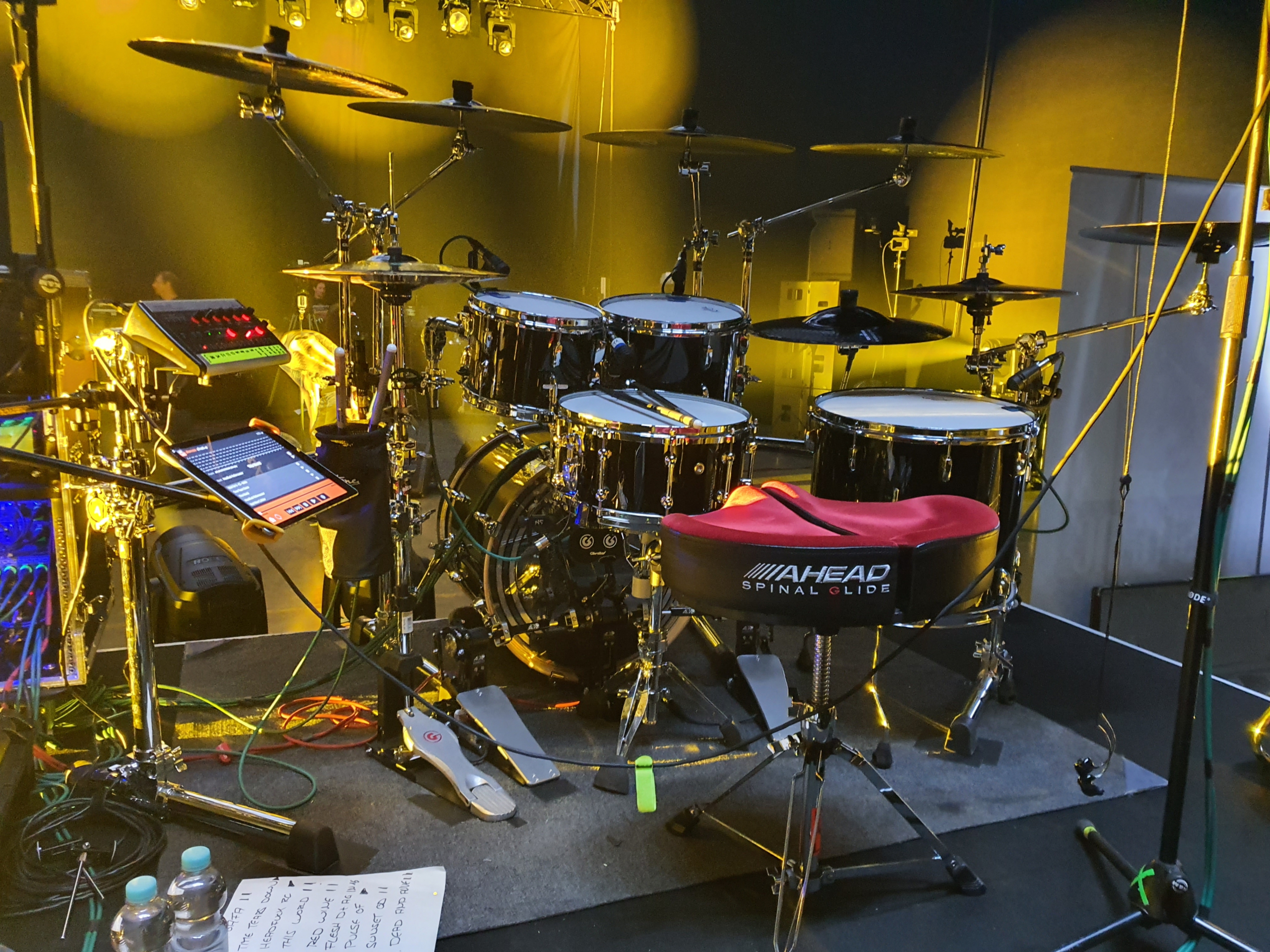
Ipad with the uTrack software & personal mixer on the left
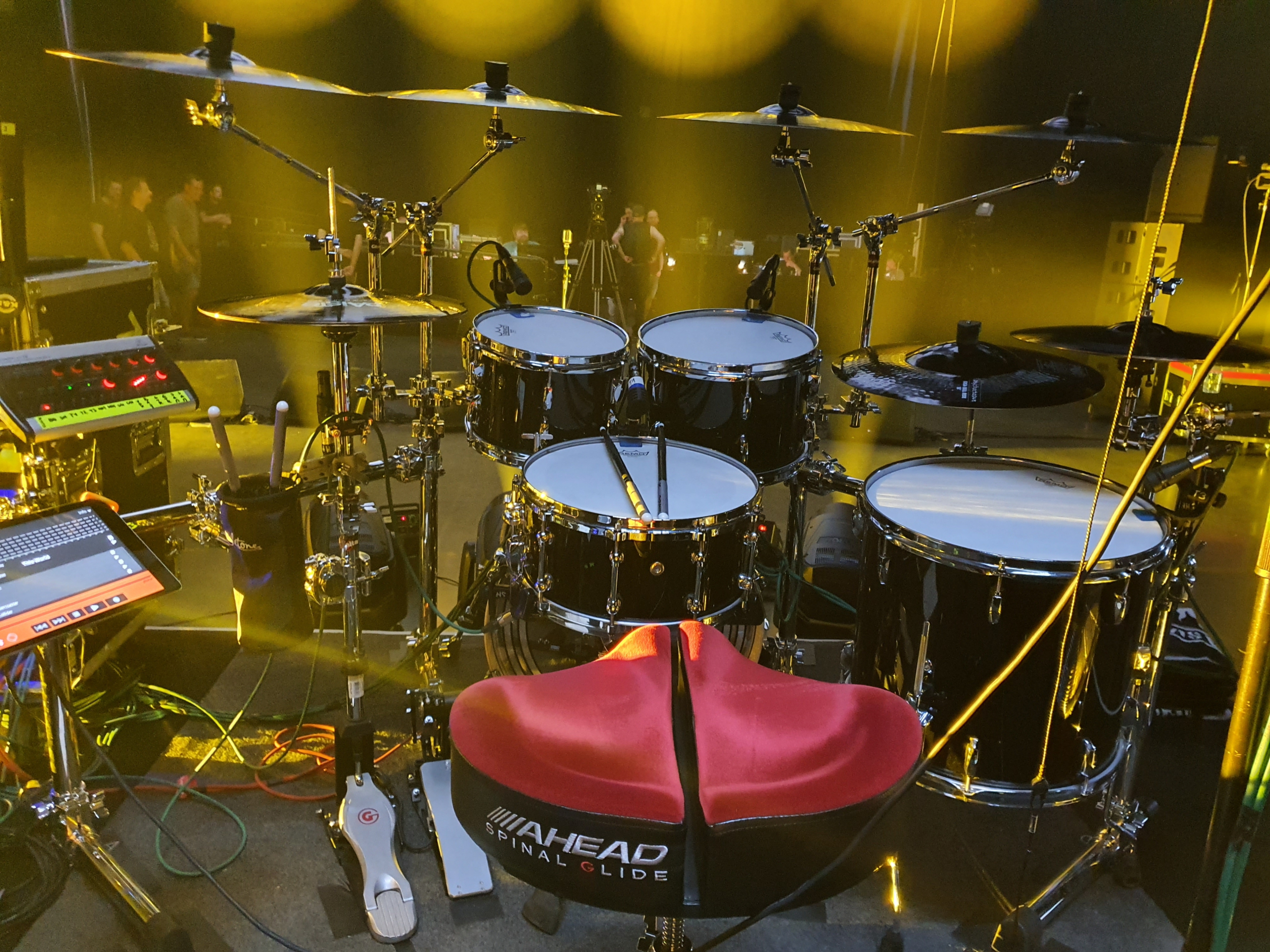
Ipad with the uTrack software & personal mixer on the left
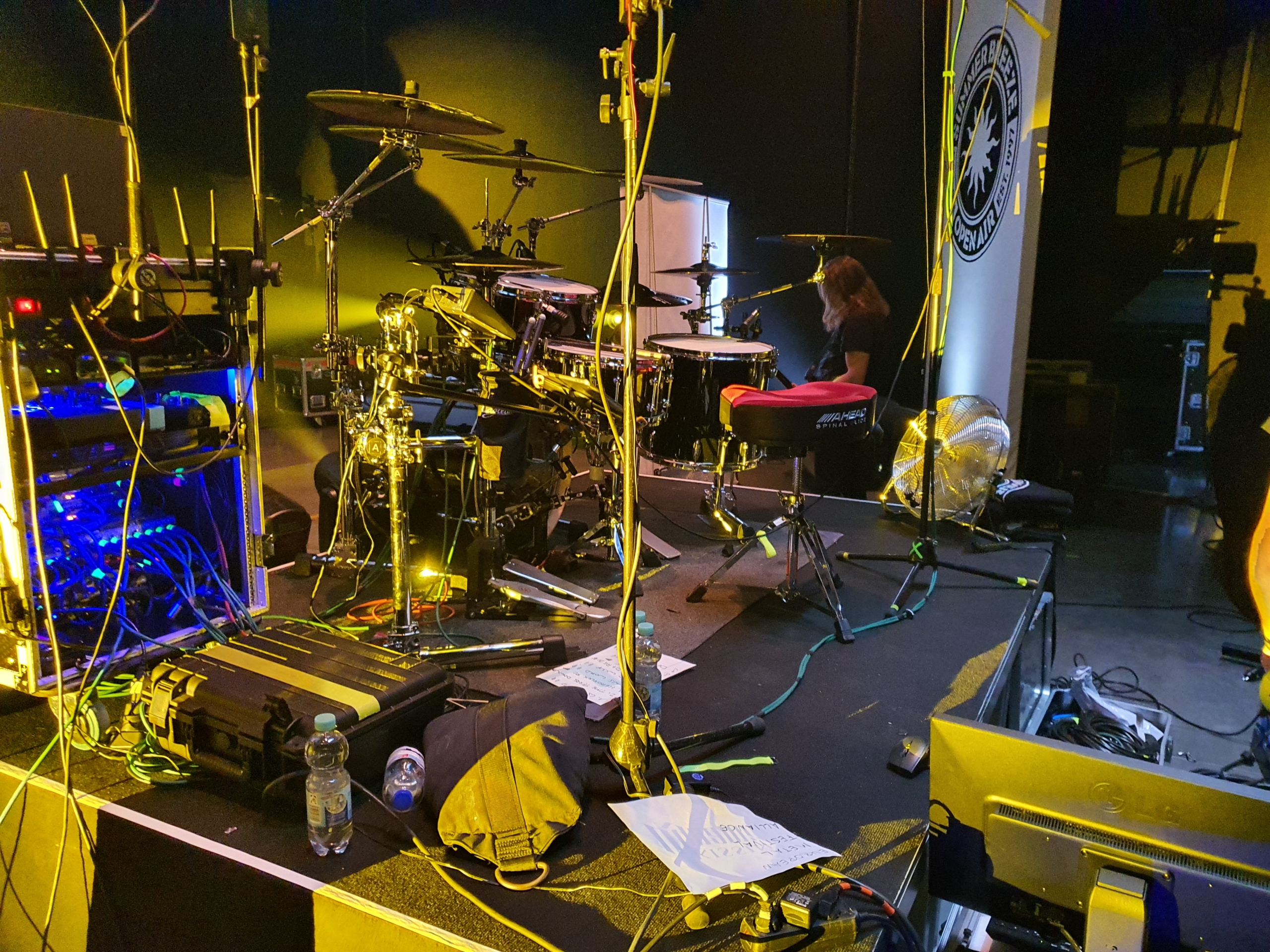
Ipad with the uTrack software & personal mixer on the left
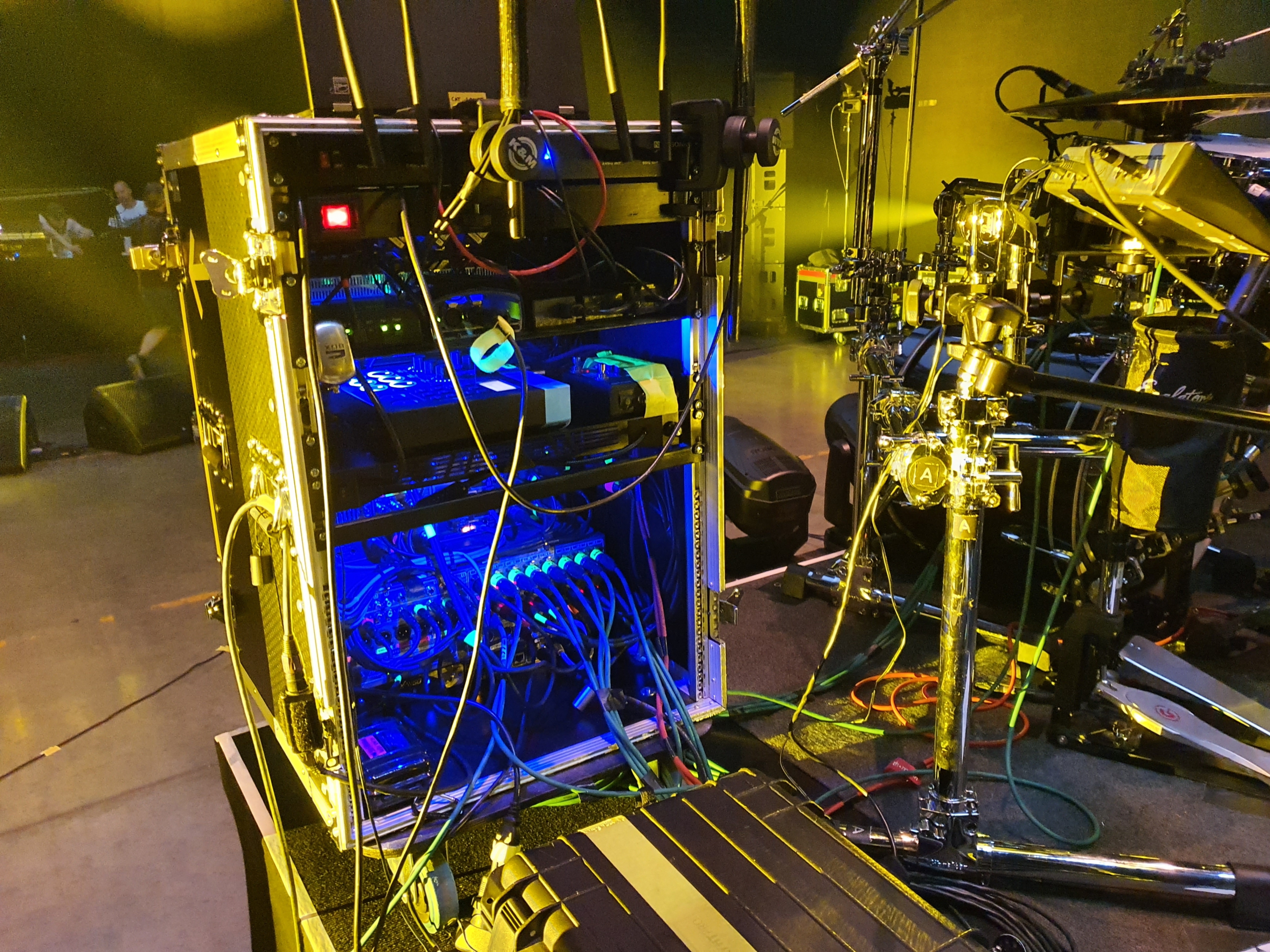
Main rack from behind, including guitar amps, wireless system, uTrack & Behringer X32
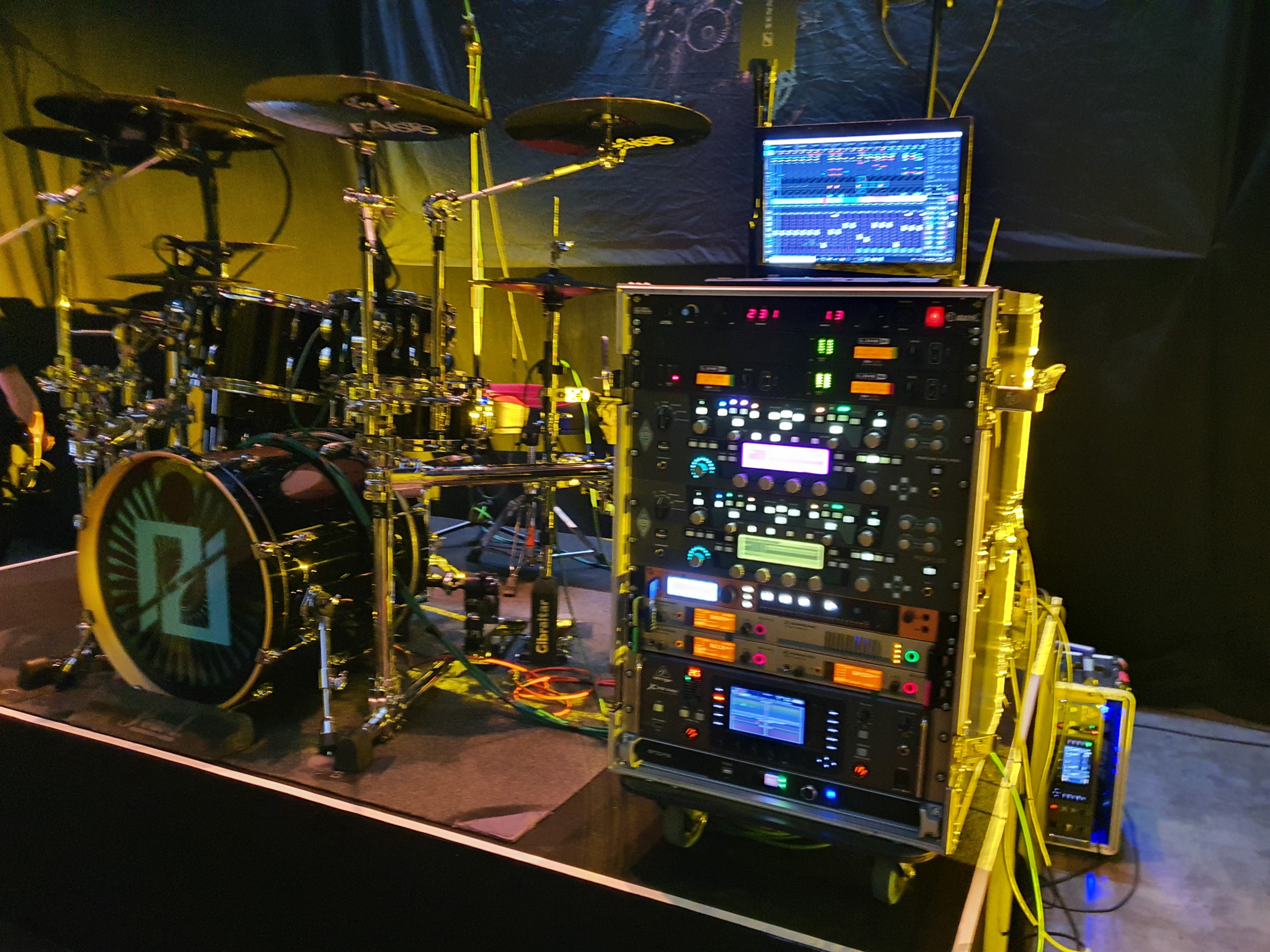
Main rack from the front, including guitar amps, wireless system, uTrack & Behringer X32
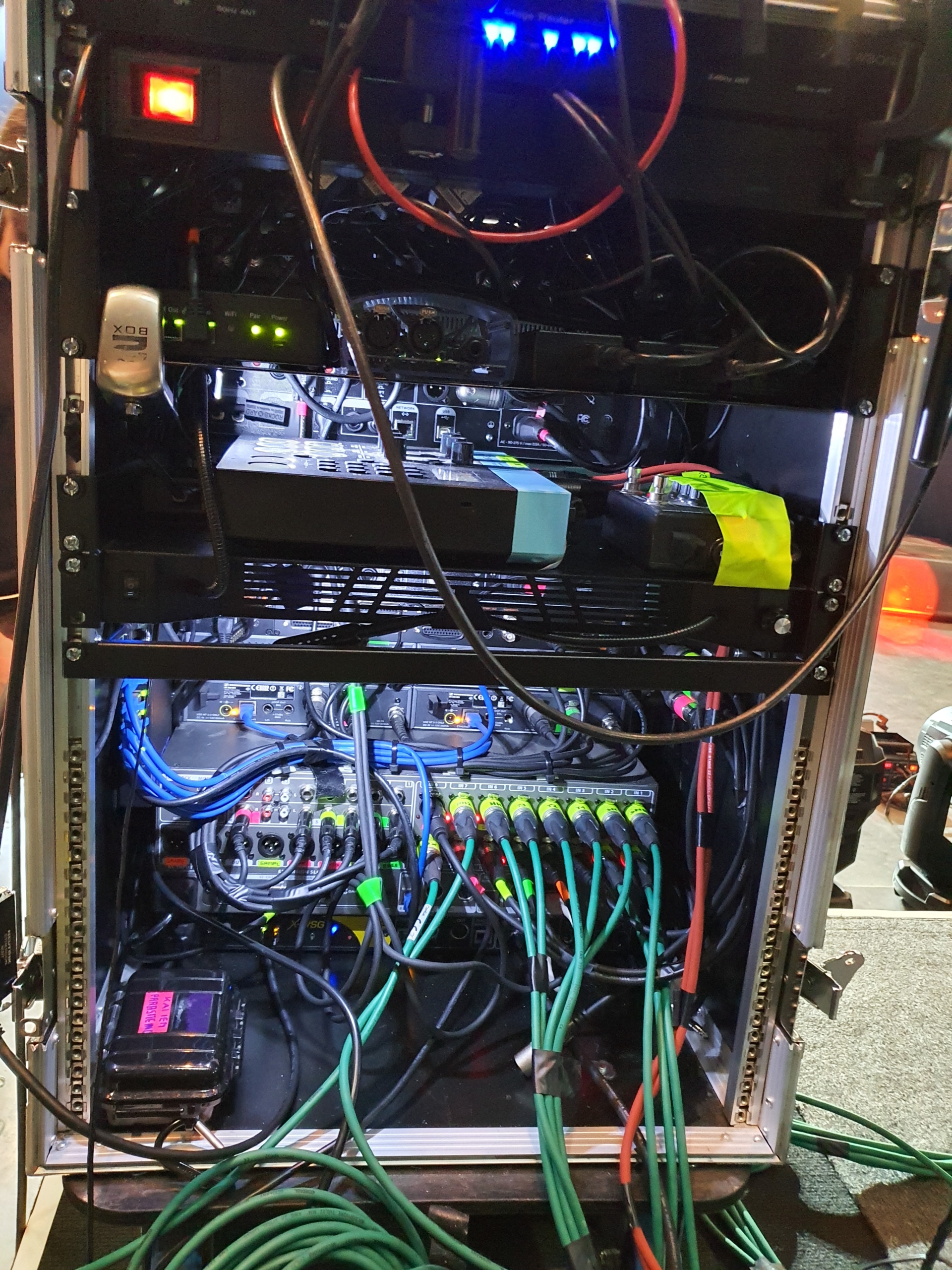
Only Kai really knows where to plug what in
More tech talk in the future?
I hope you found this post interesting. This one was definitely more technical than our usual Club of the Dead posts. Let us know in the comments if you’d like more content like this. We could also do a guitar rig rundown or a full live rack walkthrough in the future.